Design Ideas for Shared Children’s Bedrooms

Design Ideas for Shared Children’s Bedrooms

Your home may not be large enough for your children to have separate bedrooms. How about a few creative ideas that can make sharing a space much more enjoyable for everyone?

If there are not enough bedrooms at home and your children share a room, a few changes can make the space both more practical and more enjoyable for them. This may seem challenging at first: every child has their own world and preferences. A design that appeals to each child individually therefore calls for both creativity and functional thinking. There is no need to worry, however. Our suggestions can help make sharing a room a more enjoyable experience.
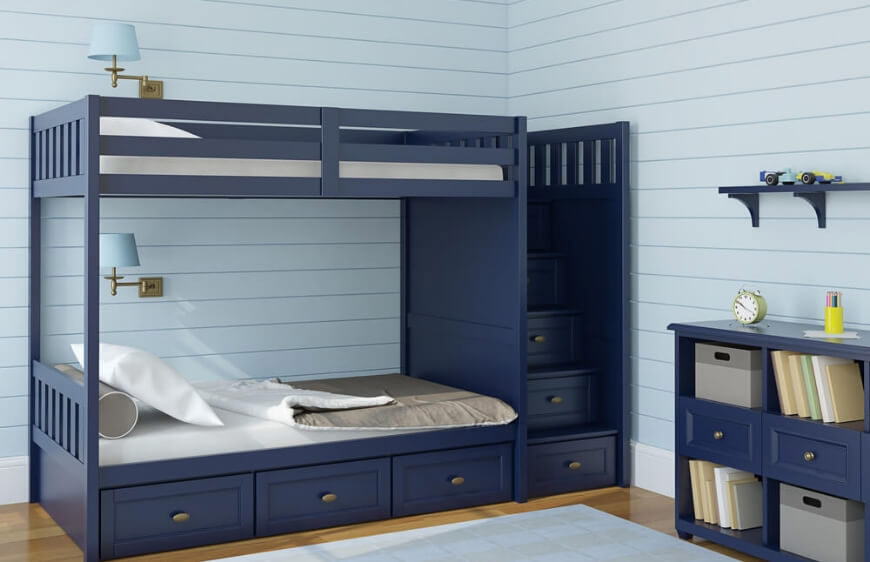
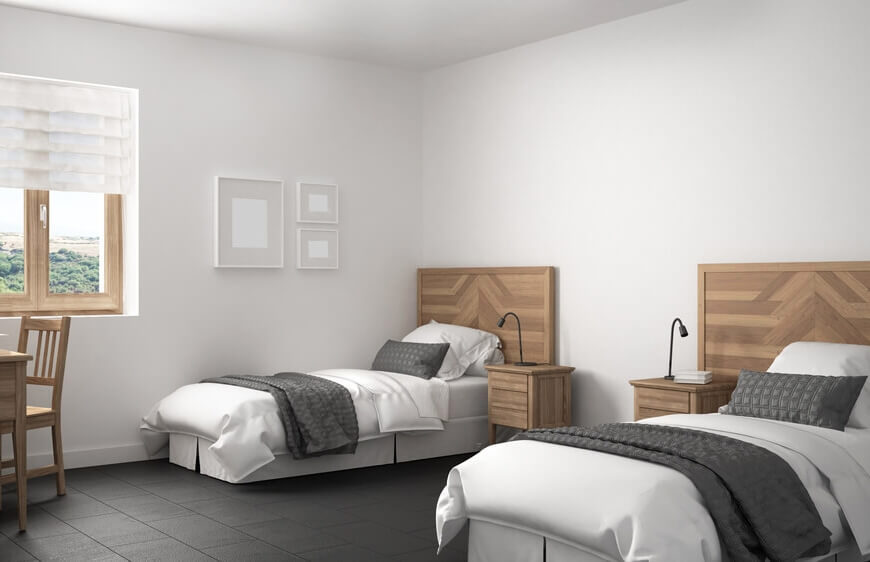
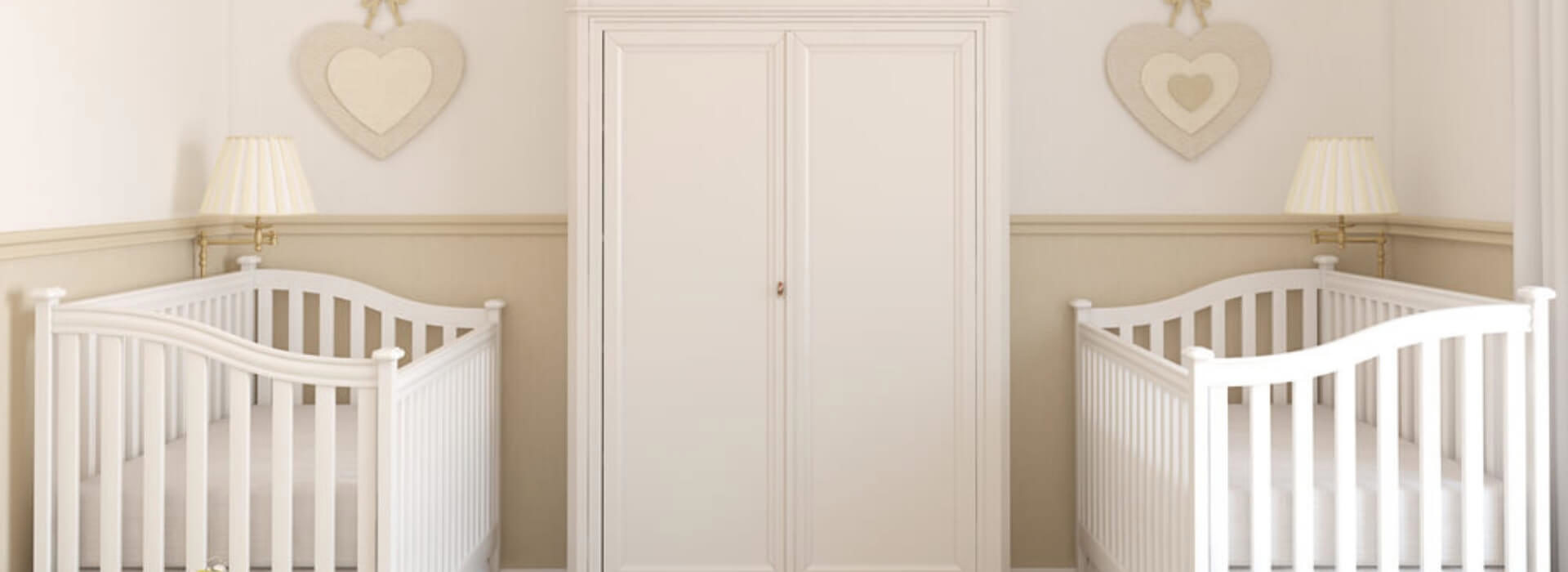
Do not forget the fundamental rule: depending on their age, ask your children what they want, listen to their ideas and involve them in designing their room. If you decide to use coordinating furniture throughout, you can mix and match furniture or textiles, bringing different pieces together within the same style.
One Room or Separate Rooms?

Both separate bedrooms and shared rooms have advantages and disadvantages. Some of us will do whatever it takes to give children their own rooms for greater privacy and longer sleep, while others prefer them to share even when space is available. A separate room can support individual responsibility, confidence and independent decision-making, while sharing teaches siblings to negotiate and build bonds.Let us explore some decorating ideas that work well in a shared bedroom.
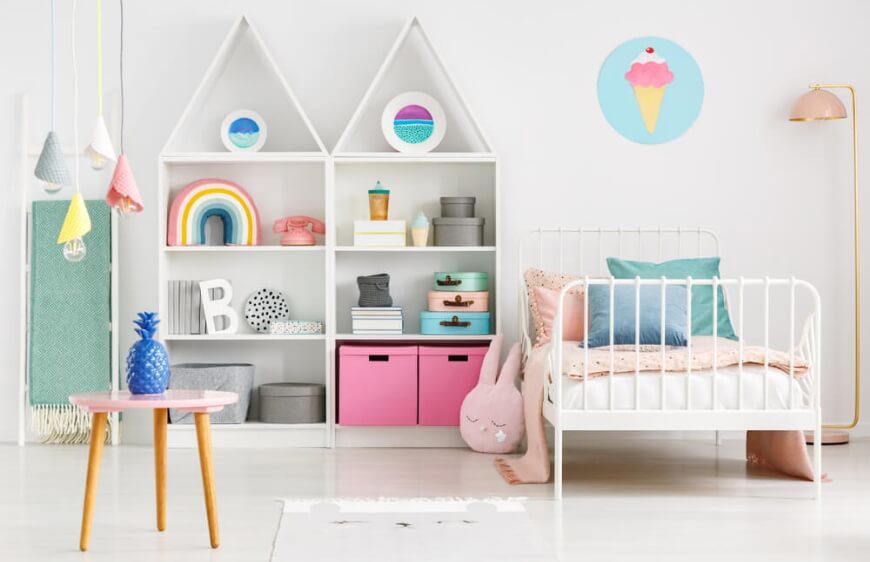
A Shared Colour Palette

Start by choosing a shared colour palette that reflects their tastes. Ask your children to pick their favourite colours, then complement these two colours with others. This can help avoid disagreements about the room's colour scheme. With careful choices, they can enjoy an attractive bedroom that still suits their tastes several years later.

A neutral colour scheme, for example, creates an atmosphere filled with nature's positive feelings and even a little mystery. You can personalise the space with toys, pictures or wall stickers. Colours drawn from nature and the earth are timeless and will remain in style as your children grow.Colours also influence our mood and feelings. A palette of soothing, relaxing pastels may therefore be a better choice, helping children feel calm rather than overwhelming their senses.

Create Separate Sleeping Corners

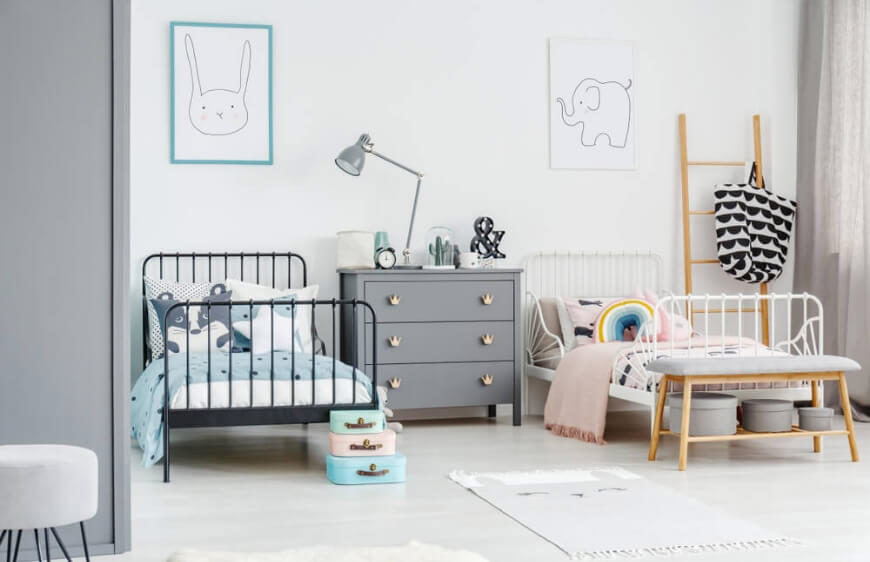
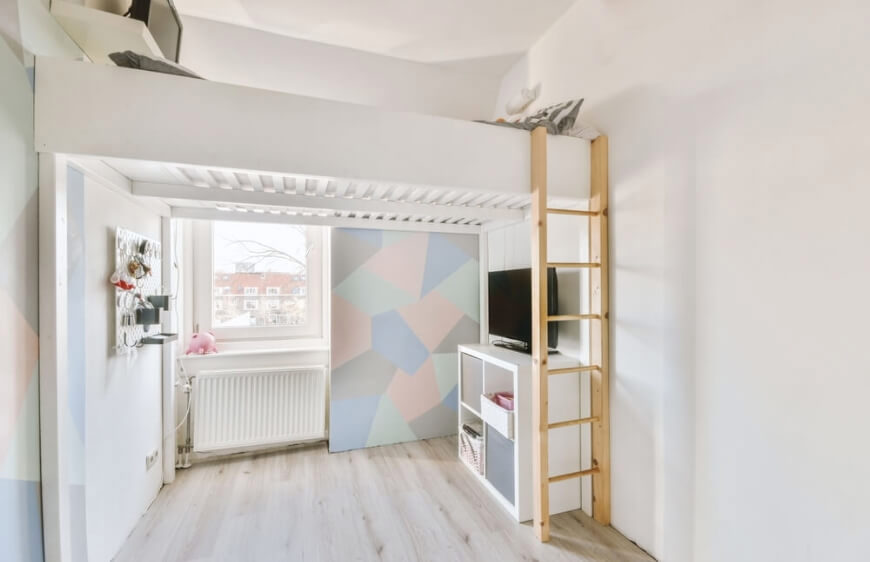
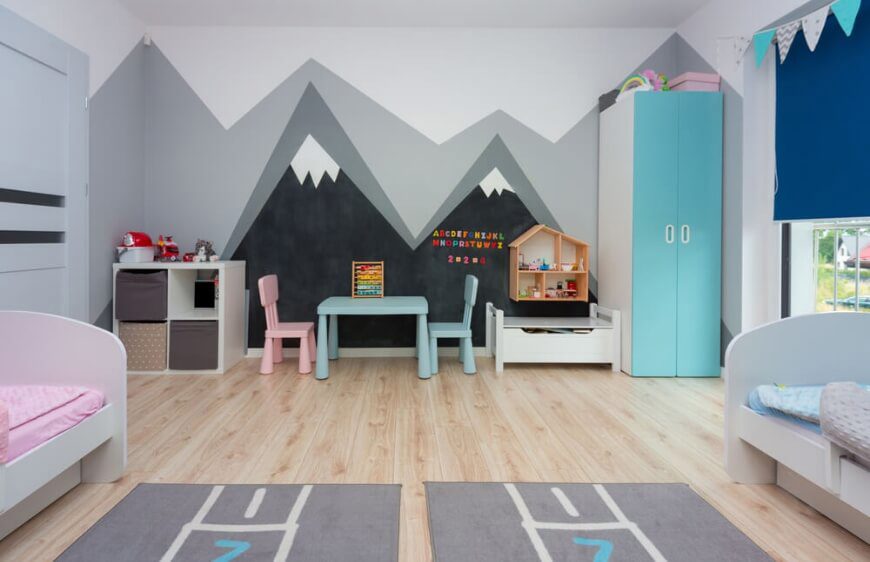
Positioning beds in diagonally opposite corners, rather than side by side or as bunks, helps divide the room intelligently and gives each child a private area. By placing the beds in opposite corners and dividing the room with a curtain, screen, half-room panel or bookcase, you can create a separate space for each child.

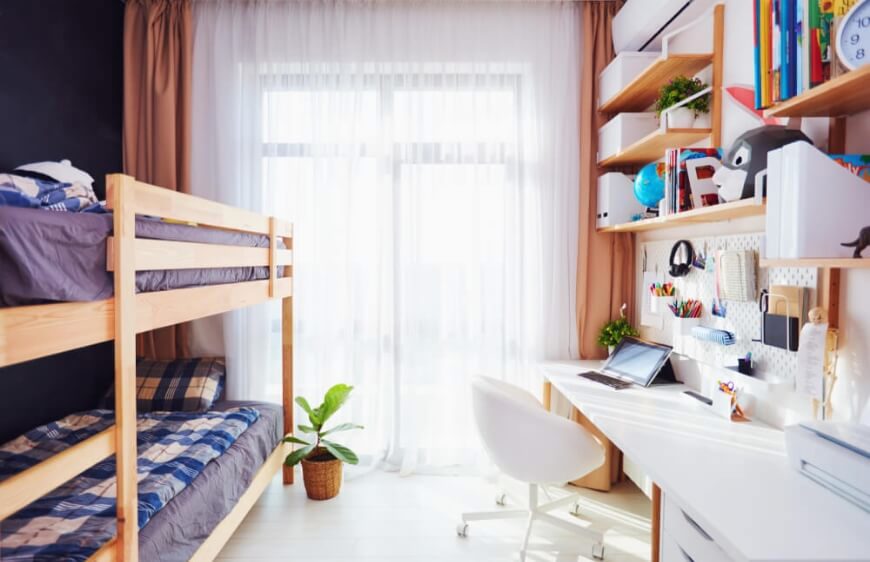
Traditional bunk beds are, of course, a tried-and-tested solution for two children sleeping in a small bedroom. However, they may not work as well for children of different ages whose needs vary. If a younger child still enjoys bedtime stories and you want to pull up a chair beside the bed, consider an alternative arrangement. Two single beds positioned in an L shape, at a 90-degree angle, can provide this.

Storage in a Shared Room

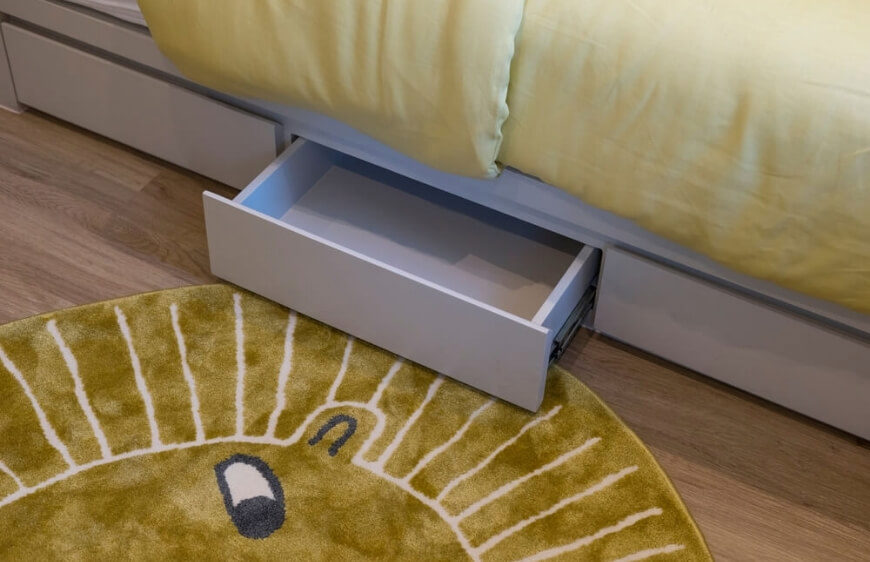
Creating dedicated storage is one of the most important aspects of designing a shared children's room. Clear boundaries between each child's belongings will probably prevent disagreements later. Two bedside tables, two wardrobes if space allows, or a pair of chests of drawers will provide enough storage for both children. Choosing beds with storage bases also helps remove clutter and create a calmer room.

If your beds have drawers underneath rather than lift-up storage bases, check which way the drawers open. Both beds' drawers should open without intruding on the other child's area. Even if your children are best friends, shared bedroom storage can be a recipe for conflict.

You can also install a hanging rail beside each bunk and hang storage baskets or bags from it. This helps children keep their belongings separate and within easy reach of their beds.

Different Wall Decorations

Another way to distinguish the two sides of a shared children's room is through different wall decorations. Decorate each child's area with messages, photographs, pictures and posters that make it personal, styling the walls to reflect their taste.

Personalising with Names

“But that's mine!” is a familiar argument in children's rooms. To reduce it, we recommend personalising as many things as possible. Using your children's names decoratively in different places is a fun, easy way to define their personal spaces and ensure each sibling can express themselves. Add personalised duvet covers and pillows embroidered with their names, or use their names on pencil pots, folders and wardrobe labels in lettering they enjoy.

Creating a Private Corner

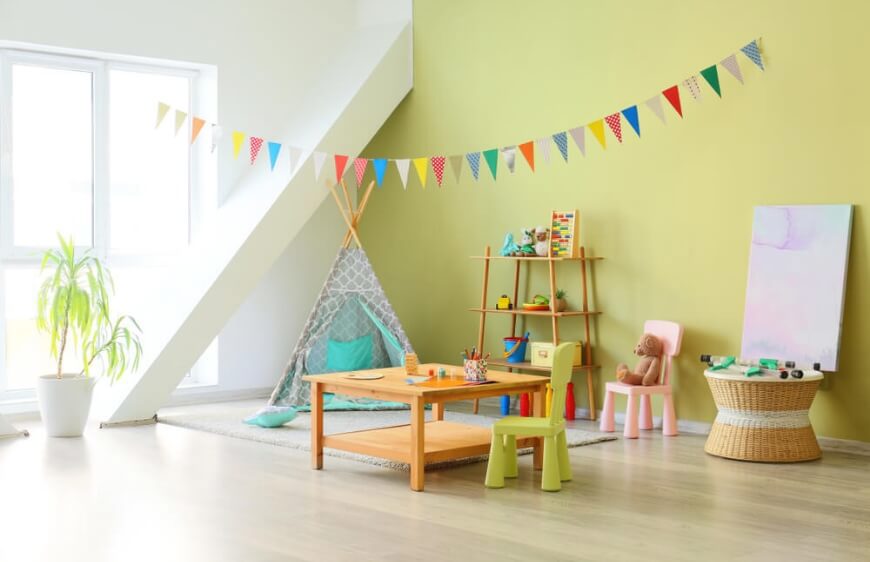
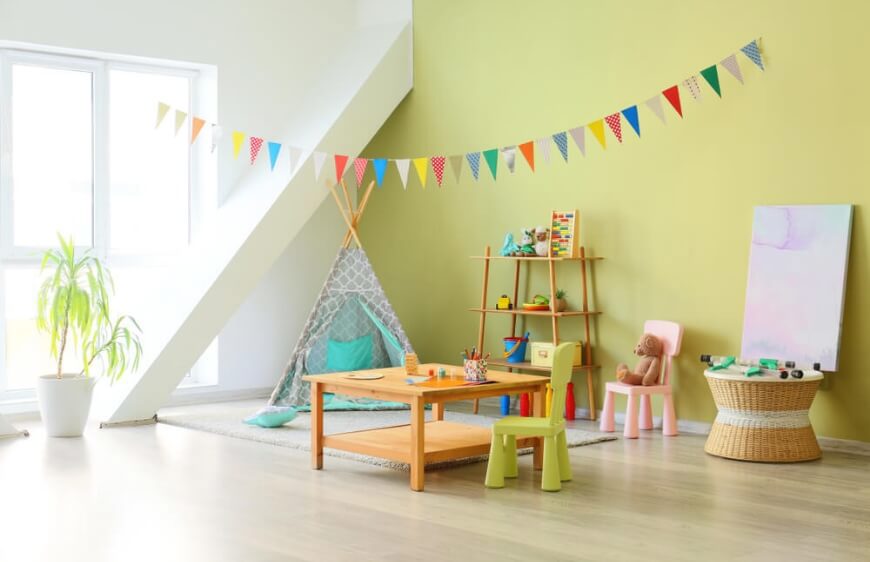
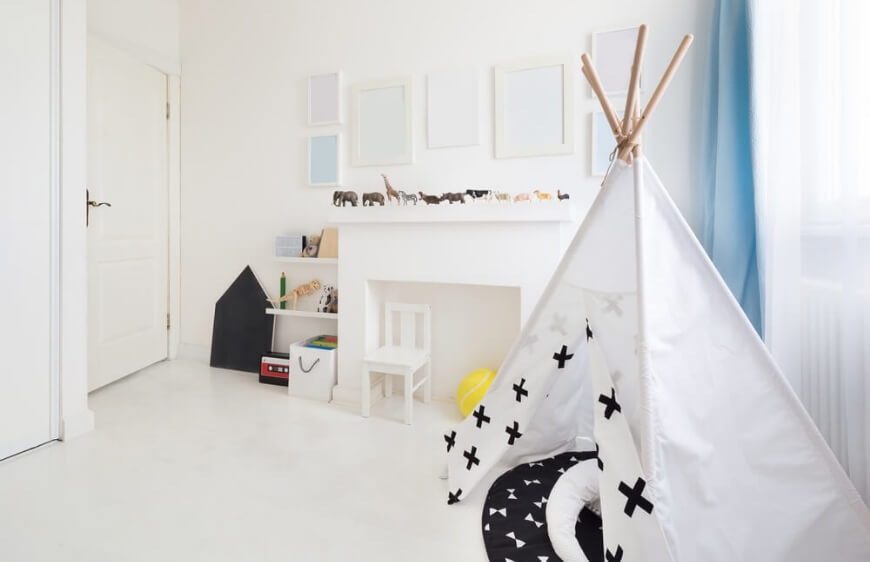
Every child may need to be alone from time to time. At other times, they may want an enclosed little world to play in with their sibling. A tent in their bedroom can serve both purposes: they can choose to play together inside or use it as a place to spend time apart.

To create this tent, fit an S-hook to the ceiling, hang a large piece of fabric from its centre and secure each corner at a different point on the floor. Alternatively, buy a ready-made tipi-style play tent and fill it with cosy rugs and cushions.

Mekanınızı yapay zeka ile birkaç saniyede yenileyin!

Mekanınızı yapay zeka ile birkaç saniyede yenileyin!

Seçtiğiniz ürünü evinizde görün.

Evinde Gör

Banyonuzu yeniden tasarlamaya ne dersiniz?

Banyoda Gör

Blog

Explore All

Compare

Compare
Compare