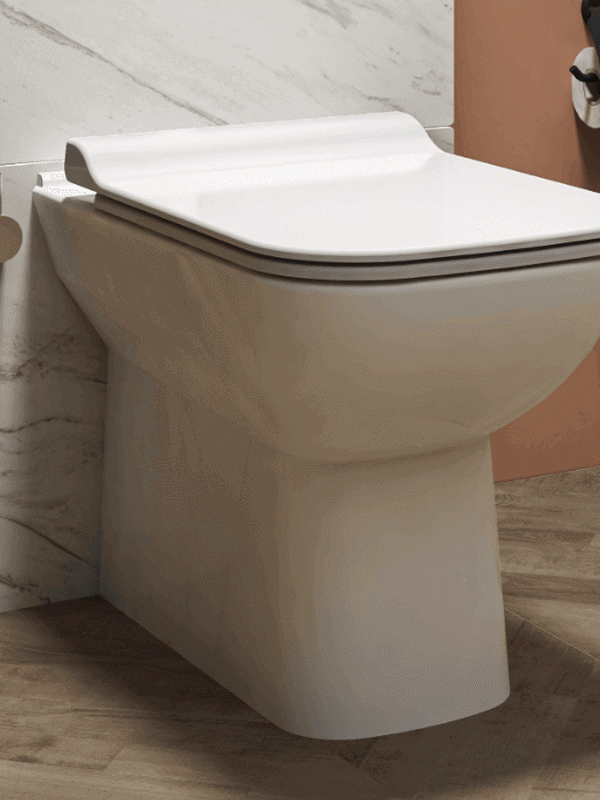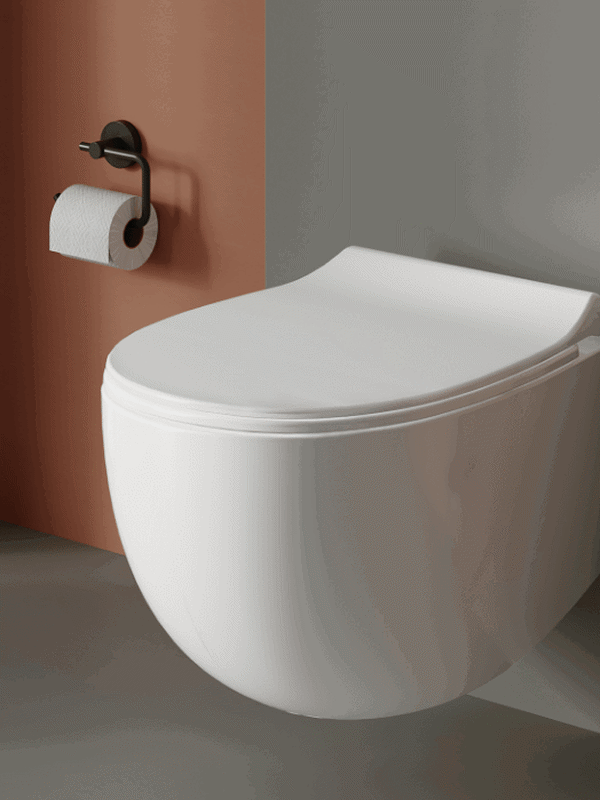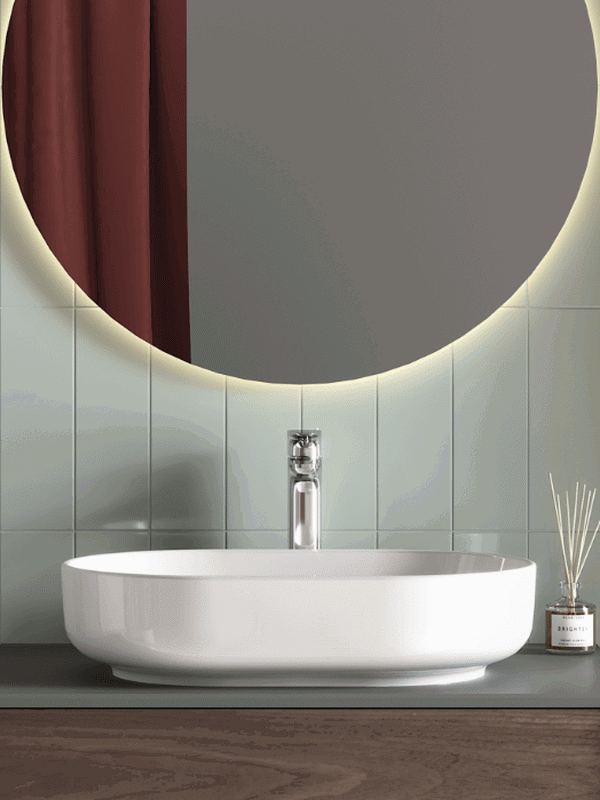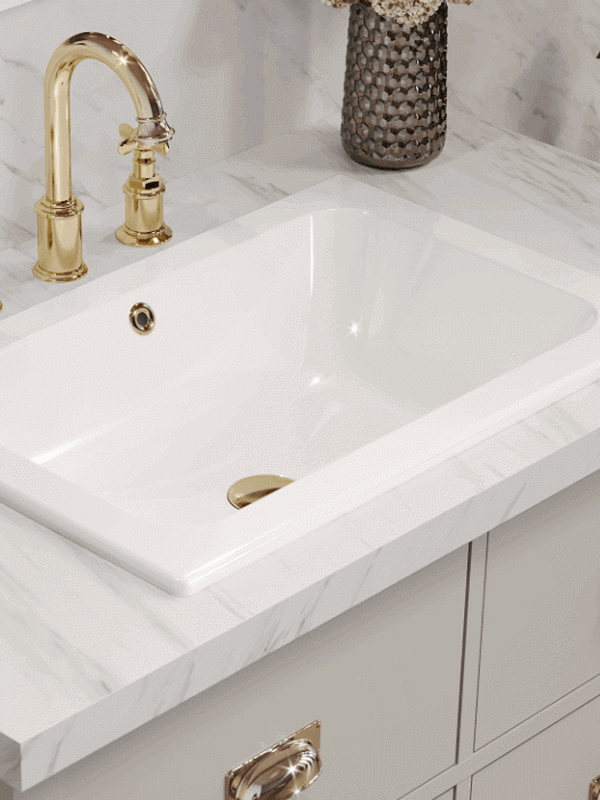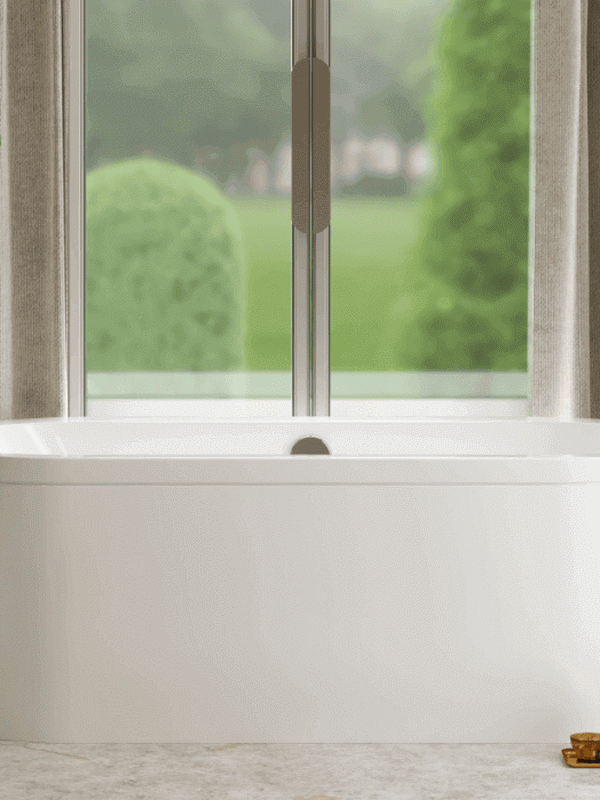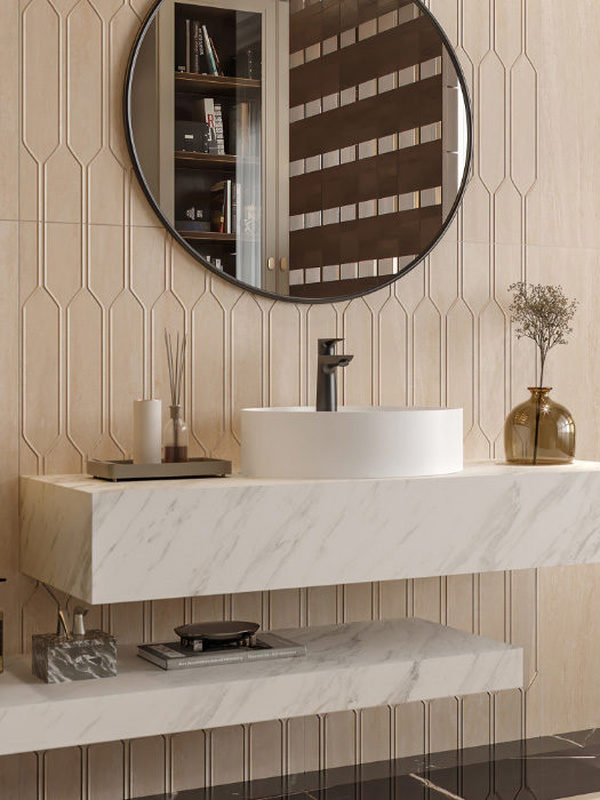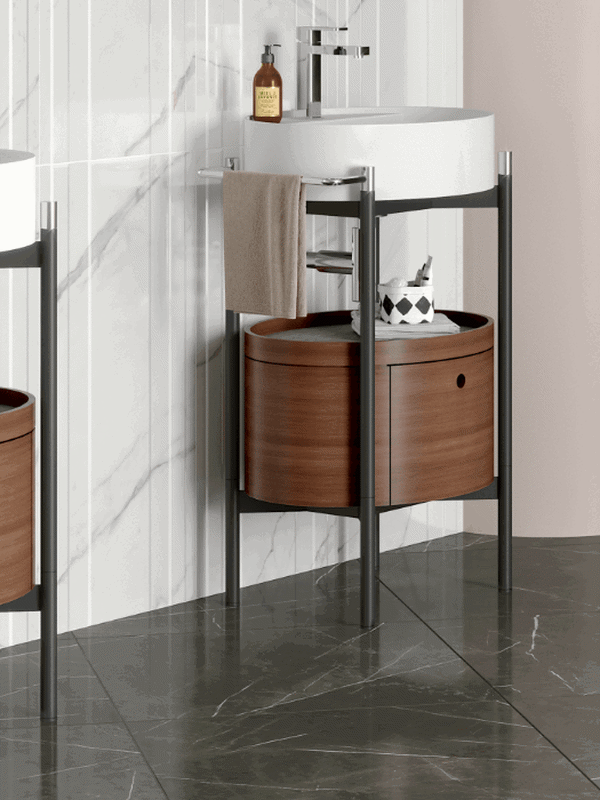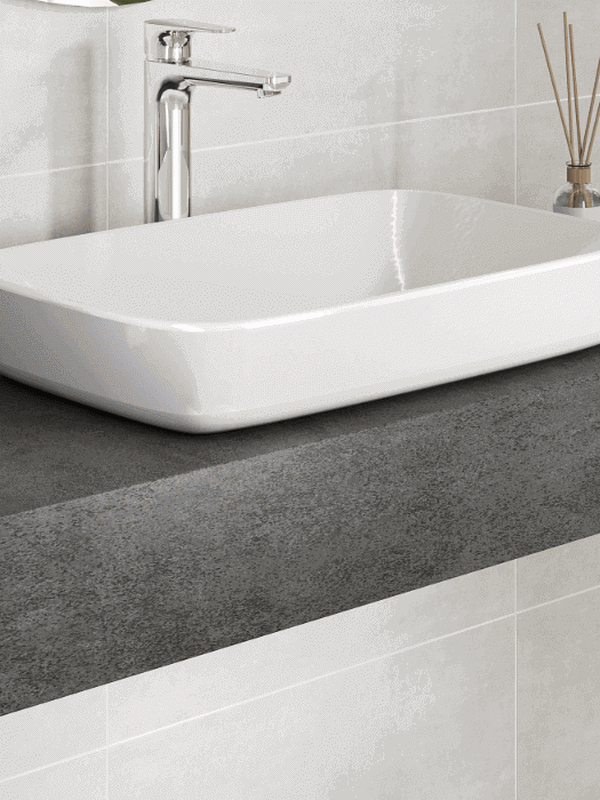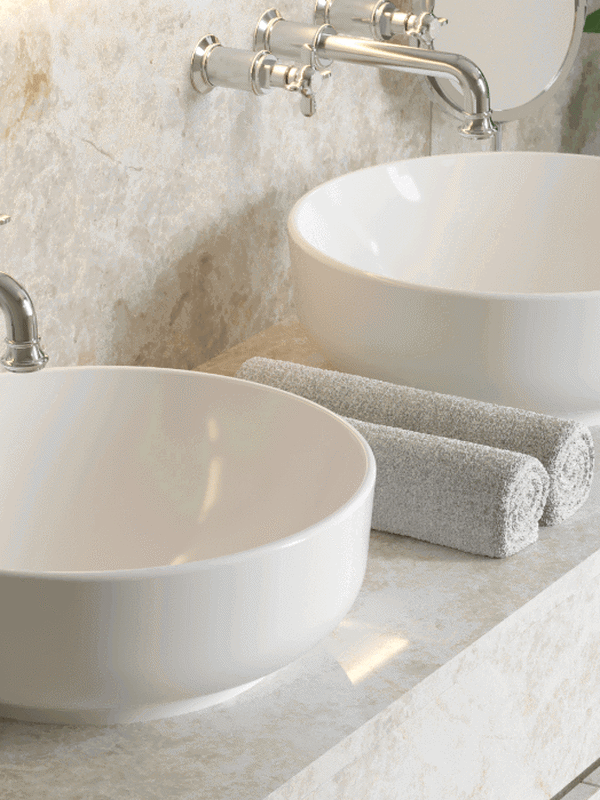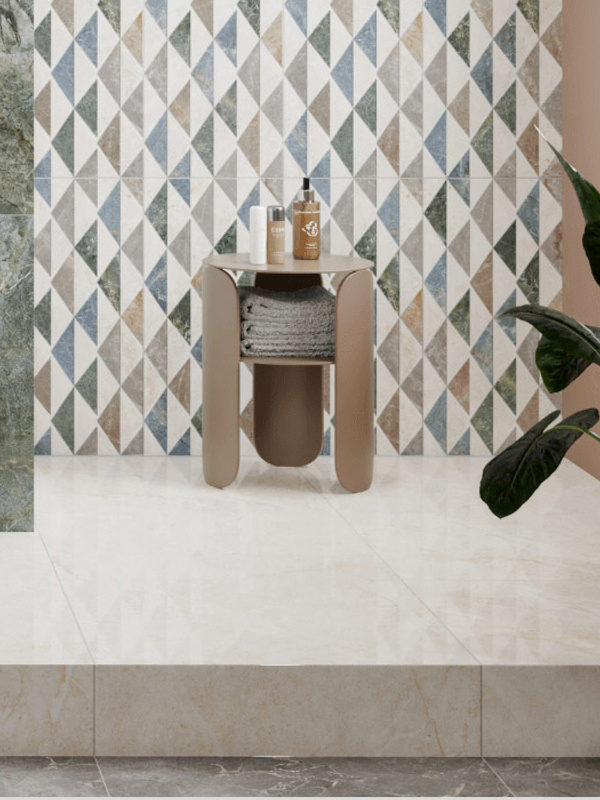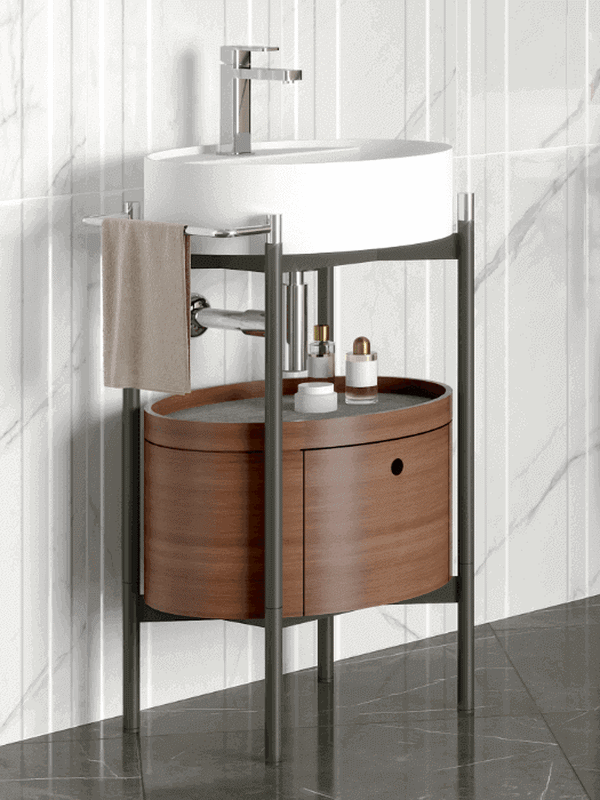

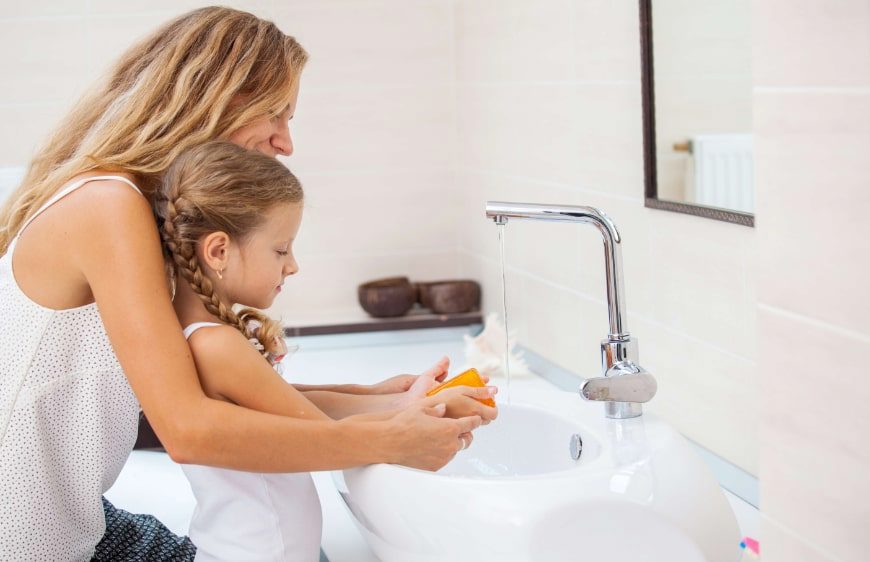
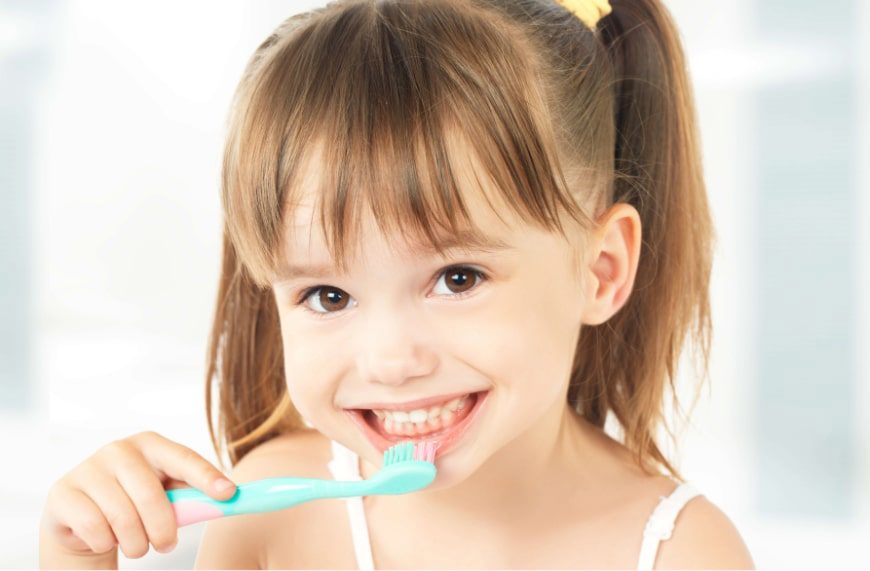
A suitable bathroom environment is important for toothbrushing and toilet training. Have a safe step so your child can reach the basin, a toothbrush holder decorated with comic-book characters, a soft brush that is gentle on the gums and a healthy toothpaste ready to use. Your child's towel should look different from those of other family members and hang within easy reach. For toilet training, provide a comfortable seat and a step on which to rest their feet. An entertaining book, such as an illustrated story about a little bear learning to use the toilet, can be helpful. Over time, this ritual helps the child become familiar with the toilet more quickly. An approach such as “Little Bear needs the toilet; let's take him there” eases fears, encourages a sense of responsibility and gradually helps the child use the toilet comfortably.
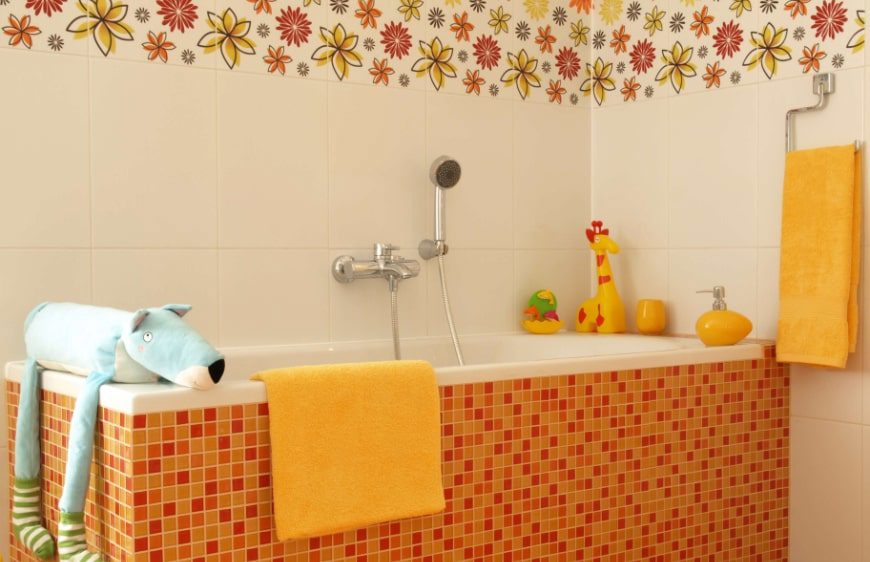
Bathroom Designs for Parents
Bathroom design for families with children should offer thoughtful solutions for fun, safety and hygiene.
How can you help children enjoy bath time?
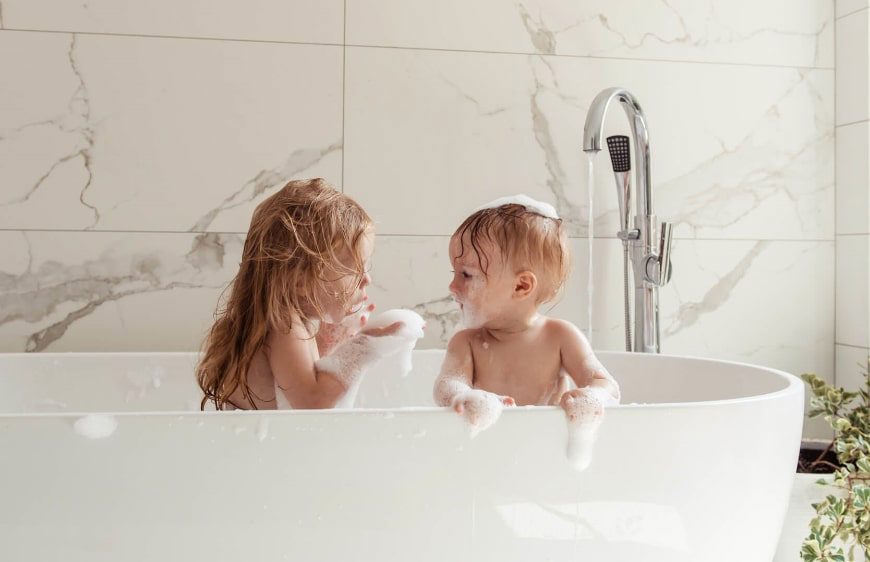
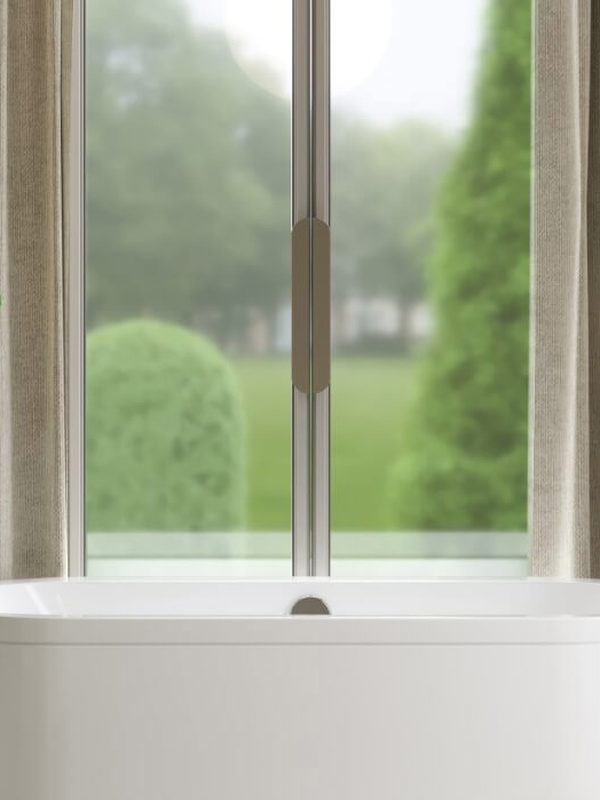
Although playing with water can be great fun, some children resist bath time. The magic word here is “play”. Invite them to play rather than to wash, and they will come running. If you have a bathtub, a bubble bath, waterproof toys and wall stickers whose stories you tell can make the experience enjoyable.
Habits begin in childhood
Awareness of hygiene and protecting the environment
Make sure you explain to your children that they should turn off the tap while brushing their teeth, put toilet paper in the bin rather than the toilet, wash their hands thoroughly afterwards, turn off the tap while soaping their hands, leave the toilet clean and switch off the light when they leave. Keep encouraging these actions until they have learnt them, and insist on them each time. They should become lasting habits for hygiene and protecting the environment.
Child safety in bathrooms
According to hospital records, injuries caused by slipping on wet floors rank first among accidents in the home. The first step in the bathroom should therefore be to reduce slipperiness with a suitable rug. The same risk exists in the shower or bathtub, and it applies to adults as well as children.Bathrooms are full of hard surfaces because of their function. You can apply temporary protective strips wherever your child might bump their head, taking their height into account. If you have a bathtub, never leave your child alone while they play in the water, and make sure electrical sockets are out of reach.