














































Success
Your request has been successfully received. We will contact you as soon as possible.

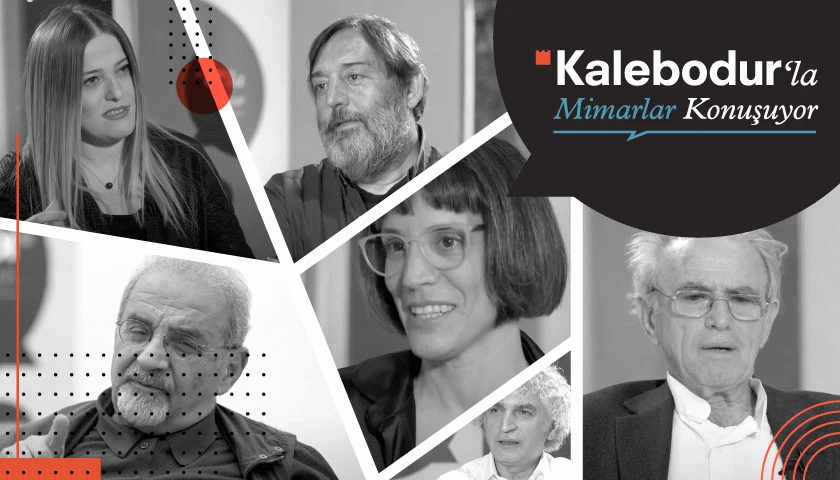
Architect Abdurrahman Çekim, a partner at Baraka Mimarlık, was Professor Dr Celal Abdi Güzer’s October guest on “Architects in Conversation with Kalebodur”.
Launched by Kalebodur to contribute to the development of architecture, the conversation series once again hosted a prominent figure from the sector. Presented by Professor Dr Celal Abdi Güzer, the programme brings successful practitioners together with aspiring architects. Its latest guest was Abdurrahman Çekim, known for distinguished projects with Baraka.
Agreeing that Baraka Mimarlık had developed rapidly through distinctive work, Çekim told Güzer: “I think having a high-paced background—airports, offices, housing and various other projects—gave us a certain maturity. When we opened the practice, we thought we would focus on competitions. We were a small office in Kuzguncuk. As we were opening, a friend in Switzerland brought us a commission. Within a few months, we began receiving a very high volume of enquiries. That demand is still growing. I don’t know why, but perhaps it is because we are a very hard-working practice. We explore many possibilities through many proposals. I think that generated word-of-mouth communication among clients.”
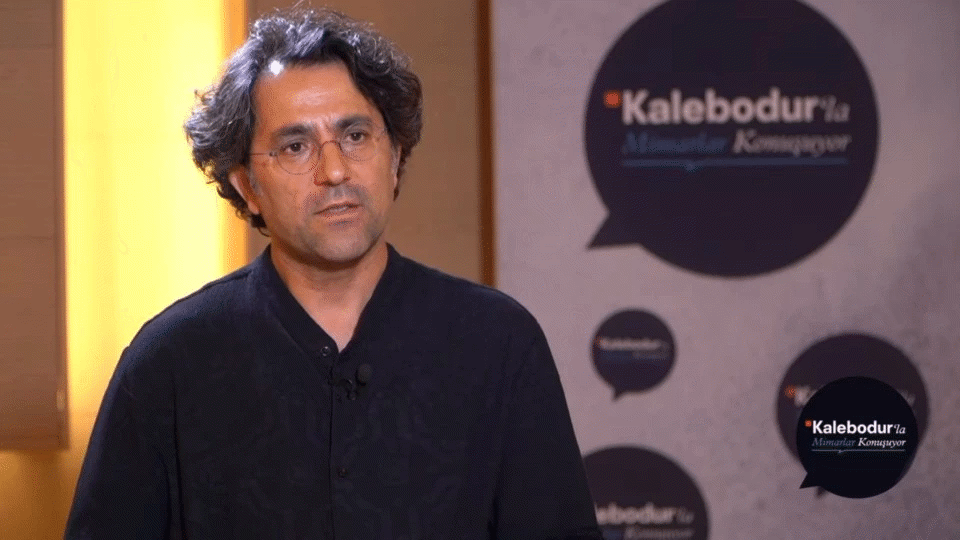
Discussing the nature of quality work, Çekim said: “The Swiss work by the hour and charge hourly. We tend to work by the day. This suggests that more distilled, refined work can produce better results. Compared with the offices where I worked before, our approach may be partly a reaction and more experimental. There is enough time in the day if you use it efficiently. So, as a way of speeding up decision-making, we sometimes began reducing three weeks’ work to two weeks, or three days’ work to two days. Moving from a rather relaxed situation to a more compact, responsive way of working has been good for us.”
Explaining Baraka’s working principles, he said everyone in the office can participate in any project as much as they wish. He continued: “Earlier generations taught us to ask questions first and then narrow them down to one. In architecture, it was something like ‘there is a problem and it has one answer’. We turned that upside down too. Without committing to anything, we ask questions, experiment and make models, trying to follow not only the paths offered by logic but also those opened by intuition and chance. Logic guides you from what it knows and the ideas close to it. Chance has a very different story: entirely new situations can emerge, and you can recognise potential more easily. Over the past three or four years, we have therefore built a structure based on chance and experimental work, supported, of course, by conceptual frameworks. We call it understanding, searching, accumulating and foaming: we gather the bubbles that form in the air and then bring them together. We begin to free ourselves from familiar, habitual situations. We try to turn the mind’s mechanisms upside down, and that is an important working principle in the office.”
On client relationships, Çekim said: “Some friends often tell us we work with very good clients. Yes, we do, but those clients have commissioned other buildings too. We try to involve them from the very beginning of the design process. We used to present projects at intervals of 45–60 days and were accustomed to that. You show nothing, then suddenly present the project and say, ‘This is where we have arrived.’ Now that we involve clients from the outset, something interesting happens after a while: they take ownership, and we cannot persuade them to step back.”
Launched by Kalebodur to uphold values important to society and architecture, the monthly “Architects in Conversation with Kalebodur” series, moderated by Professor Dr Celal Abdi Güzer since 2013, is in its tenth year. Güzer, who hosted his 112th guest in December, speaks with leading practitioners, offering a deeper understanding of architecture and an opportunity to get to know architects making an impact worldwide.
For architectural culture to develop, supporting architects is important, but maintaining that support is equally vital. Kalebodur is among the organisations that have achieved this. One of its pioneering initiatives for architecture, the series has continued since 2013. Above all, it aims to hear first-hand from influential figures in contemporary architecture, exploring their views on today’s environment and the foundations of their own practice.
Alongside products and technologies that support architects’ creativity, Kalebodur continues to develop lasting projects across different platforms, including academia, to contribute to an architectural archive in Türkiye.
For many years, Kalebodur has supported architectural culture through its own projects, including “Kalebodur’la Mimarlar Konuşuyor”, “Mimarlara Bülten”, “Mimarın Mutfağında” and “Kalebodur ile Mimarlık”, as well as sponsored initiatives such as “Açık Mimarlık” and “SALT Mimarlık ve Tasarım Arşivi”.
For conversations with architects and our YouTube channel: https://www.youtube.com/@Kalebodur